
Jul 19, 2026
Custom CNC Machined Humanoid Robot Parts
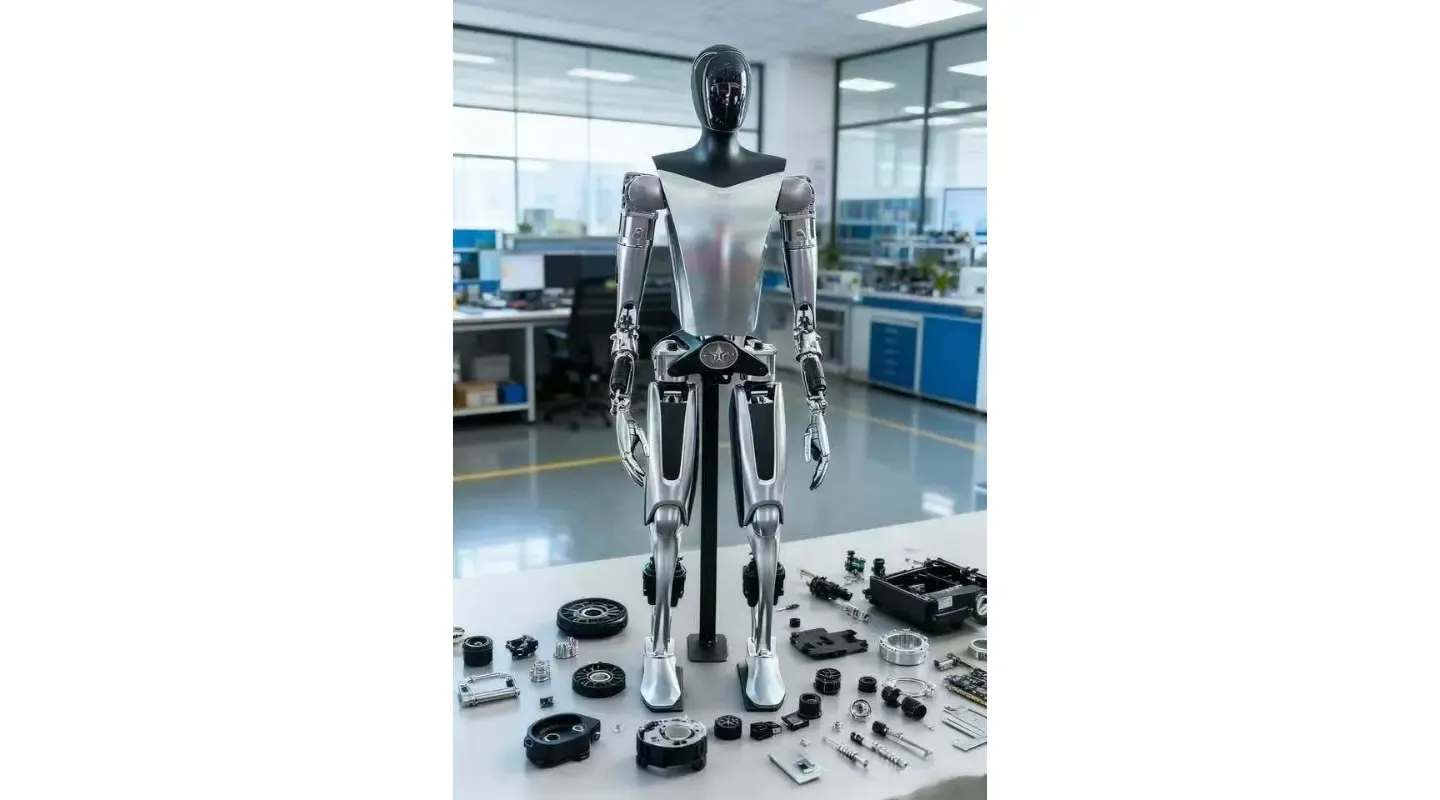
Custom CNC Machined Humanoid Robot Parts: From Prototype Validation to Stable Production
Humanoid robot development depends on more than motors, sensors, and control algorithms. The mechanical structure must also be lightweight, rigid, accurately aligned, easy to assemble, and reliable under repeated motion. This article explains how custom CNC machining supports the production of humanoid robot joint housings, robotic arm components, robotic leg parts, structural enclosures, and other precision mechanical components—from early prototypes to small-batch and mass production.
Why Humanoid Robot Component Manufacturing Matters
For robotics teams, a mechanical part that is only slightly out of tolerance can create problems far beyond the part itself.
Common issues include:
- Bearing seats that are too tight or too loose
- Joint axes that are not concentric
- Motor, reducer, and encoder mounting positions that do not align
- Excessive component weight that reduces battery life
- Thin-wall housings that deform during machining
- Hole positions that cause difficult assembly
- Surface finishes that affect fit, wear, or appearance
- Inconsistent dimensions between prototype and production batches
- Long lead times that delay testing and product iteration
These problems may lead to joint vibration, abnormal noise, increased friction, reduced positioning accuracy, premature bearing wear, or repeated manual adjustment during assembly.
For a humanoid robot project, the real purchasing requirement is therefore not simply “a machined aluminum part.” Customers need components that fit the complete mechanical system, support repeated movement, and remain consistent when production volume increases.
How Custom CNC Machining Supports Robot Development
TengRui Precision manufactures humanoid robot components according to customer-provided 2D drawings and 3D models. Before quotation and production, the engineering team reviews the design for machining feasibility and identifies features that may affect cost, accuracy, deformation, assembly, or production stability.
The company provides 3-axis, 4-axis, and 5-axis CNC machining, CNC turning, wire EDM, grinding, 3D printing, and sheet metal fabrication. This allows customers to source different robot components through one manufacturing partner instead of coordinating several unrelated suppliers. TengRui supports drawing-based custom production from one-piece prototypes to mass production, with machining tolerances down to ±0.005 mm where the design, material, dimensions, and process permit.
Humanoid Robot Joint Housings
Joint housings often integrate bearings, motors, reducers, encoders, shafts, seals, and cable-routing structures within limited space.
Critical machining requirements may include:
- Concentric bearing seats
- Accurate motor and reducer mounting faces
- Controlled shaft-hole alignment
- Precision bolt-hole patterns
- Thin-wall deformation control
- Internal cavities and weight-reduction structures
- Stable mating surfaces
- Repeatable assembly dimensions
Multi-axis CNC machining can reduce repeated clamping and help maintain the positional relationship between critical features.
Robotic Arm Components
Robotic arm parts must balance strength, weight, range of motion, and assembly accessibility. Typical components include:
- Shoulder and elbow joint housings
- Upper-arm and forearm structures
- Wrist components
- Bearing supports
- Motor mounts
- Reducer housings
- End-effector interfaces
- Protective metal covers
Depending on the design, these parts may require CNC milling, turning, sheet metal fabrication, or a combination of several processes.
Robotic Leg Components
Robotic leg parts are exposed to repeated loading, impact, vibration, and changes in direction. Manufacturing consistency is especially important because dimensional variation can affect walking stability and joint alignment.
Typical components include:
- Hip joint housings
- Thigh and lower-leg structures
- Knee joint components
- Ankle housings
- Foot supports
- Bearing seats
- Actuator housings
- Structural covers
For lightweight designs, material removal, internal cavities, ribs, and thin walls must be carefully evaluated to avoid deformation during machining.
Robot Housings and Protective Covers
Not every robot component requires solid-block CNC machining. Large external covers, equipment enclosures, and protective shells may be more economical through sheet metal fabrication, die casting, injection molding, or a hybrid manufacturing method.
Selecting the correct process can help customers:
- Reduce unnecessary material waste
- Lower component weight
- Improve production cost
- Maintain sufficient structural strength
- Prepare the design for higher-volume production
The most suitable method depends on annual demand, tooling budget, part geometry, appearance requirements, and target production cost.
Materials and Quality Control
Humanoid robot components are commonly manufactured from aluminum alloys, stainless steel, alloy steel, titanium, engineering plastics, and other application-specific materials.
Material selection should consider:
- Component weight
- Structural load
- Wear resistance
- Heat dissipation
- Corrosion resistance
- Machining stability
- Surface-treatment requirements
- Prototype and production cost
TengRui Precision states that it works with more than 100 commonly used metal and plastic materials. Its company profile lists 3-axis, 4-axis, and 5-axis machining equipment, CNC turning machines, Zeiss and Hexagon coordinate-measuring machines, and Mitutoyo surface-roughness inspection equipment. Inspection is carried out during production and before shipment to help control accuracy and batch consistency.
Depending on the drawing requirements, inspection can focus on:
- Bearing and shaft fits
- Hole position and concentricity
- Flatness and perpendicularity
- Critical dimensions
- Surface roughness
- Thread accuracy
- Mating features
- Visual appearance
- Batch consistency
Customers can also request inspection reports for critical dimensions.
Suitable Applications
Custom humanoid robot machining services are suitable for:
Humanoid Robot Startups
For teams developing new robot architectures that need low-volume prototypes, rapid design iterations, and flexible production quantities.
Robotics Research and Universities
For laboratories testing new actuators, joints, limbs, hands, end effectors, and mechanical control concepts without committing to expensive tooling.
Service Robot Manufacturers
For robots used in reception, inspection, logistics, healthcare assistance, education, security, or commercial environments.
Industrial Robotics Companies
For custom robotic arms, actuators, joints, end effectors, automation modules, and motion-control assemblies.
Exoskeleton and Rehabilitation Equipment
For lightweight joint housings, structural supports, wearable mechanisms, and components that require a combination of strength, comfort,and accurate movement.
Prototype and Low-Volume Robot Projects
For projects that require only one or several parts during verification, followed by small-batch production after the design has been tested.
Start Your Humanoid Robot Project
To evaluate a humanoid robot component accurately, please provide:
- 2D drawings and 3D models
- Material specifications
- Critical tolerances
- Bearing, motor, and reducer interface requirements
- Surface-treatment requirements
- Prototype or production quantity
- Inspection requirements
- Intended operating conditions
TengRui Precision provides NDA protection for customer drawings and supports custom manufacturing from one-piece prototypes to repeat production. The engineering team can review machining feasibility before production and point out features that may increase deformation risk, machining difficulty, cost, or assembly problems.
View our Humanoid Robot Components, Robotic Arm Components, Robotic Leg Components, and Robot Housing Parts, or send your drawings to our engineering team for a manufacturing review and quotation.