
Aug 9, 2026
Robot Planetary Housing with 0.01mm Bearing Hole Concentricity
CNC Manufacturing Specialist | Helping robotics and automation companies achieve reliable precision parts through engineering review, process optimization,and high-quality OEM machining solutions.
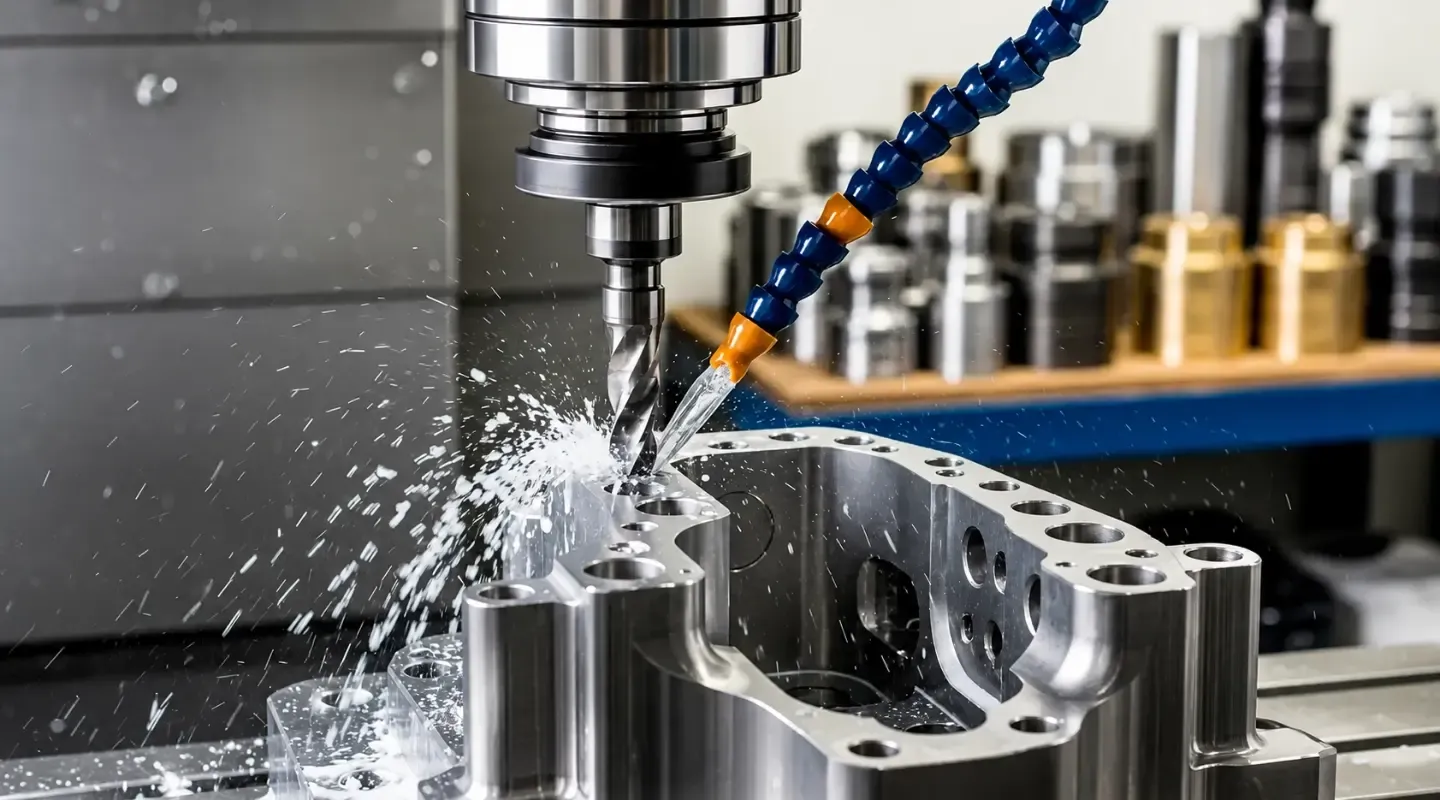
How to Evaluate CNC Machining Suppliers for Robot Planetary Housing with 0.01mm Bearing Hole Concentricity
A Practical Guide to Achieving Precision Consistency in Robotic Reducer Components
A concentricity requirement of 0.01mm represents a clear dividing line in precision machining.
For robot planetary housings, the concentricity of bearing holes directly affects the performance of the reducer system, including:
- Rotation smoothness;
- Operating noise;
- Gear wear;
- Service life.
Inside a planetary reducer, multiple gears rely on bearing holes to maintain accurate rotational alignment. Once the bearing hole axis deviates beyond the required tolerance, additional radial forces are generated during high-speed operation.
The result can include:
- Increased vibration;
- Abnormal noise;
- Uneven gear contact;
- Accelerated bearing wear;
- Reduced reducer lifespan.
These problems cannot be solved through assembly adjustment. The accuracy must be controlled during the machining process.
However, many engineering teams face a common challenge:
A drawing may specify 0.01mm concentricity, but how can you determine whether a CNC supplier can actually achieve this requirement consistently?
A supplier may produce one qualified prototype, but maintaining the same accuracy across hundreds or thousands of parts requires a completely different level of process control.
This article explains how to evaluate a CNC machining supplier for robot planetary housing components, including:
- Manufacturing risks behind 0.01mm concentricity;
- Key process factors affecting accuracy;
- How to verify supplier capability before mass production;
- What questions purchasing engineers should ask before selecting a machining partner.
0.01mm Concentricity Is Not Achieved by Machine Accuracy Alone
A common assumption is:
"If a factory owns a high-precision machining center, it should be able to produce 0.01mm concentricity."
This is only partially correct.
A high-quality CNC machine provides the foundation, but final part accuracy depends on the entire manufacturing system:
- Machine condition;
- Fixture accuracy;
- Workpiece deformation;
- Tool wear compensation;
- Cutting heat control;
- Measurement capability;
- Process monitoring.
A machine with excellent spindle accuracy can still produce unstable results if the fixture positioning is inconsistent or the machining process is not properly controlled.
For robot planetary housings, the biggest challenge is usually not machining one hole.
The real challenge is maintaining the relationship between:
- Two bearing holes;
- Multiple mounting interfaces;
- Gear alignment surfaces;
- Assembly reference features.
Why Fixture Design Is Critical for Bearing Hole Concentricity
Robot planetary housings are often lightweight structures with thin walls.
During machining, improper clamping can create deformation.
For example:
- Excessive clamping force may distort the housing;
- After releasing the fixture, the part may spring back;
- The measured machining result may look acceptable;
- But the actual assembly condition may shift.
This is why fixture strategy should be reviewed before machining begins.
For high-precision rotational components, suppliers should carefully evaluate:
- Datum selection;
- Clamping force distribution;
- Repeat positioning accuracy;
- Machining sequence.
A stable fixture system reduces the risk of concentricity variation between production batches.
Machining Process: Why Precision Boring Usually Requires Multiple Steps
For bearing holes requiring 0.01mm concentricity, a single finishing operation is often not enough.
A reliable process usually requires controlled machining stages:
Rough Machining
Purpose:
- Remove excess material;
- Establish basic geometry;
- Reduce machining stress.
Semi-Finishing
Purpose:
- Remove remaining machining allowance;
- Stabilize the hole position;
- Prepare consistent conditions for final finishing.
Precision Boring
Purpose:
- Achieve final diameter;
- Control concentricity;
- Maintain surface quality.
The reason for separating these operations is simple:
Cutting forces, tool wear, and thermal effects become increasingly important as tolerances become tighter.
A supplier that only focuses on the final machining step may achieve a good first sample but struggle during production.
Tool Compensation and Process Monitoring
Even with a stable machining process, tool wear can gradually affect precision.
During batch production, small changes in:
- Cutting edge condition;
- Tool diameter;
- Material hardness;
- Cutting temperature;
can influence bearing hole accuracy.
Therefore, reliable suppliers should have methods to monitor and control these changes.
Important questions to ask:
- How often are critical dimensions checked?
- Is tool wear compensated based on actual measurement?
- Are process trends monitored?
- What happens when a deviation trend appears?
The goal is not only detecting defective parts.
The goal is preventing defective parts from being produced.
Material Selection Also Influences Precision Stability
Robot planetary housings are commonly manufactured from materials such as:
- Aluminum alloys;
- Stainless steel;
- Alloy steel;
- Titanium alloys.
Different materials create different machining challenges.
Aluminum Alloys
Advantages:
- Good machinability;
- Suitable for lightweight structures.
Challenges:
- High thermal expansion;
- Temperature changes may affect dimensional stability.
Stainless Steel
Challenges:
- Higher cutting force;
- Faster tool wear;
- Greater heat accumulation.
Titanium Alloy
Challenges:
- Lower elastic modulus;
- Greater tendency for tool deflection;
- Requires carefully controlled cutting parameters.
A capable machining supplier should understand how material selection affects:
- Tool choice;
- Cutting parameters;
- Fixture design;
- Inspection requirements.
How to Verify a CNC Supplier Before Mass Production
A common mistake is approving a supplier based only on one successful prototype.
For precision robotic components, a better evaluation approach includes several verification stages.
1. Drawing and DFM Review
Before machining, the supplier should review:
- Critical tolerances;
- Manufacturing feasibility;
- Datum structure;
- Potential deformation risks.
A good supplier should identify risks before production begins.
2. Prototype Validation
The supplier should provide:
- Actual measurement data;
- Concentricity results;
- Dimensional inspection records;
- Process feedback.
A simple "passed inspection" statement is not enough.
Engineering teams need measurable data.
3. Batch Consistency Verification
The key question is:
Can the supplier repeat the same result?
During evaluation, review:
- Multiple sample results;
- Variation between parts;
- Process stability;
- Inspection frequency.
A qualified prototype does not automatically prove production capability.
Checklist for Selecting a Precision CNC Supplier
When evaluating suppliers for robot planetary housing machining, ask:
Engineering Capability
- Does the supplier perform DFM reviews?
- Can they suggest manufacturing improvements?
- Do engineers understand precision assembly requirements?
Machining Process
- How do they control fixture accuracy?
- How do they prevent thin-wall deformation?
- What is their approach to precision boring?
Quality Control
- What measurement equipment is available?
- Can they provide dimensional reports?
- How are process variations controlled?
Production Stability
- How do they monitor batch consistency?
- How do they handle abnormal trends?
- Can they support prototype-to-production transition?
TengRui Precision: Supporting Global Robotics and Automation Projects
For overseas engineering teams, selecting a CNC supplier is not only about finding a factory that can machine a part.
The more important question is:
Can this supplier help reduce manufacturing uncertainty before the product reaches the assembly line?
TengRui Precision Machinery Co., Ltd. provides OEM precision machining services for international customers in robotics, automation equipment, industrial machinery, medical equipment, and other precision industries.
The company works based on customer drawings, 3D models, and technical requirements, supporting projects from engineering review and prototype machining to batch production.
:contentReference[oaicite:0]{index=0}
For precision components such as:
- Robot joint structures;
- Planetary reducer housings;
- Bearing housings;
- Motion module components;
- Complex mechanical parts;
TengRui Precision focuses on helping customers evaluate manufacturability, control production risks, and establish stable supply processes.
Manufacturing Capability Supporting Precision Projects
TengRui Precision provides:
- 3-axis CNC machining;
- 4-axis CNC machining;
- 5-axis CNC machining;
- CNC turning;
- Precision grinding;
- Wire EDM;
- Additional manufacturing processes.
The company also provides inspection capability including:
- ZEISS CMM;
- Hexagon CMM;
- Surface roughness measurement;
- Precision dimensional inspection.
Suitable Applications
TengRui Precision supports international customers working in:
Robotics
- Robot joint components;
- Reducer housings;
- Structural parts;
- Motion system components.
Automation Equipment
- Precision mechanical structures;
- Machine components;
- Custom assemblies.
Industrial Equipment
- High-precision housings;
- Transmission components;
- Customized mechanical parts.
Before Contacting a CNC Supplier
To receive a meaningful manufacturing evaluation, prepare:
- 2D drawings;
- 3D CAD files;
- Material specifications;
- Surface treatment requirements;
- Critical tolerance information;
- Estimated quantity;
- Inspection requirements.
A professional CNC supplier should not only provide a quotation.
They should help answer:
- Is the design manufacturable?
- What are the potential production risks?
- How can consistency be maintained?
- What inspection method is appropriate?
Conclusion
For robot planetary housings requiring 0.01mm bearing hole concentricity, the most important factor is not simply the machine specification.
The real capability comes from the complete system:
Design review → Process planning → Fixture strategy → Machining control → Measurement verification → Batch consistency
A supplier that can control this entire chain can help engineering teams reduce quality risks, avoid assembly problems, and build a more reliable global supply chain.