
Aug 5, 2026
CNC Machining Robot Joint Housing Case Study
How TengRui helped a global automation company improve robotic joint housing production reliability through DFM review, first article inspection, SPC process control, and precision CNC machining.
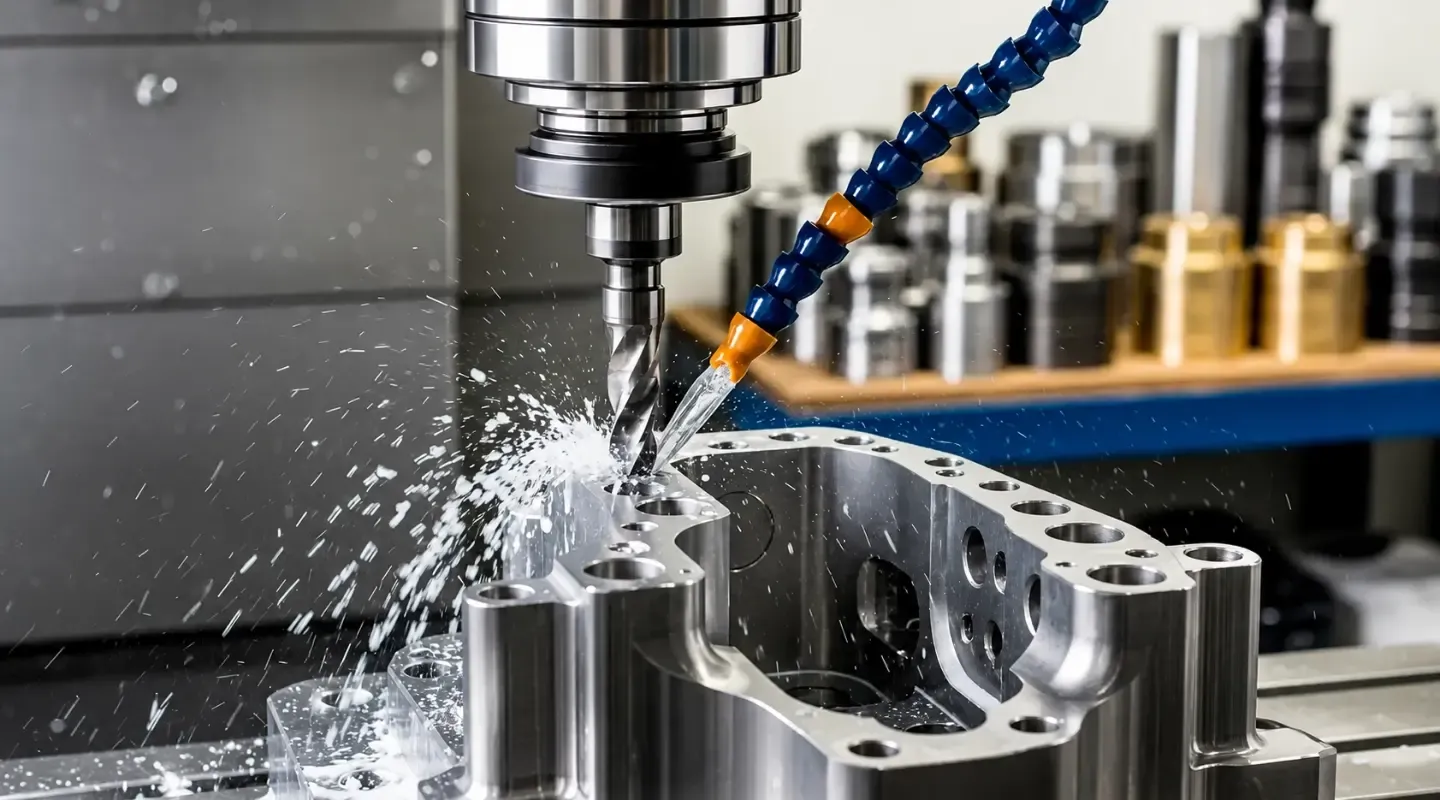
From 89% to 99%+ Assembly Success Rate: CNC Quality Control Case Study for a Robotic Joint Housing
Customer Challenge: Achieving Consistent Precision in Robotic Component Production
A global automation equipment manufacturer was preparing a new robotic motion module for mass production.
During the engineering review stage, the customer identified a critical manufacturing challenge with the robotic joint housing. The component required not only high machining accuracy but also long-term dimensional stability across repeated production batches.
The part included:
- Three critical mating surfaces with tolerance requirements within ±0.01 mm
- Multiple mounting interfaces requiring cumulative positional accuracy within 0.025 mm
- Consistent assembly performance across hundreds of production units
For robotic applications, producing one qualified prototype is only the first step. The real challenge is maintaining the same accuracy and assembly performance throughout volume production.
Even minor dimensional variations could lead to:
- Assembly interference
- Additional manual fitting
- Longer commissioning time
- Production delays at the customer's assembly line
The customer was therefore not looking for a conventional CNC machining supplier. They needed an OEM manufacturing partner capable of identifying risks before production and maintaining stable quality throughout the entire manufacturing process.
Manufacturing Challenge: Why Final Inspection Alone Was Not Enough
Many machining suppliers follow a traditional approach:
Machining → Final Inspection → Defect Detection → Rework
While this method can work for general mechanical parts, it creates higher risks for precision robotic components.
The customer identified three major concerns:
1. Dimensional Variation During Batch Production
A single qualified sample does not guarantee production consistency.
For robotic assemblies, small variations between batches can affect:
- Mechanical clearance
- Motion accuracy
- Assembly repeatability
The key question was not:
"Can the supplier make one good part?"
The real question was:
"Can the supplier make hundreds of identical parts consistently?"
2. Manufacturing Risks Often Start Before Machining
Many quality issues originate from the manufacturing process itself:
- Improper fixture design
- Multiple repositioning operations
- Incorrect machining sequence
- Tool wear effects
- Unstable process parameters
Once these problems appear during mass production, correction becomes costly and time-consuming.
3. The Customer Needed a Predictable Manufacturing Process
For robotics and automation equipment, customers need confidence that production quality is repeatable.
A reliable supplier should not only inspect finished parts.
The supplier should build quality into the manufacturing process from the beginning.
TengRui Solution: Moving Quality Control from Inspection to Prevention
After receiving the customer's drawings and 3D models, TengRui Precision Machinery started with a comprehensive DFM (Design for Manufacturing) review before production.
The objective was simple:
Identify potential manufacturing risks before they become production problems.
1. DFM Review: Optimizing the Manufacturing Process Before Production
TengRui's engineering team evaluated:
- Critical tolerance requirements
- Machining accessibility
- Fixture strategy
- Tool selection
- Potential deformation risks
- Production repeatability
For the robotic joint housing, the team focused on reducing positioning errors and improving process stability.
The manufacturing plan was optimized through:
- Improved machining sequence
- Reduced unnecessary repositioning
- Adjusted machining allowance
- Optimized cutting strategies
The customer received engineering feedback before production started, including:
- Potential manufacturing risks
- Recommended process improvements
- Critical dimension control strategies
This early collaboration helped reduce uncertainty before moving into mass production.
2. First Article Inspection (FAI): Validating Production Capability with Data
After confirming the manufacturing process, TengRui produced the initial prototype batch.
Instead of checking only several key dimensions, the first articles were verified according to production-level inspection requirements.
The inspection included:
- Critical dimensional measurement
- Geometric tolerance verification
- Position accuracy inspection
- Assembly tolerance evaluation
Using precision measurement equipment including ZEISS and Hexagon CMM systems, the results showed:
Inspection Item | Result |
|---|---|
Critical dimensions | Passed drawing requirements |
Position accuracy | ≤0.018 mm |
Assembly clearance variation | Controlled within 0.015 mm |
Production readiness | Approved for batch manufacturing |
The customer received a complete inspection package containing:
- Actual measurement values
- Dimensional deviations
- Tolerance analysis
- Inspection records
This provided confidence that the process was capable of producing stable results beyond prototype quantities.
3. Process Monitoring During Mass Production
During the first production batch of 200 units, TengRui continued monitoring key dimensions through process control methods instead of relying only on final inspection.
Quality control included:
- Regular dimensional verification
- SPC trend monitoring
- Process variation analysis
During production, one critical feature showed a gradual dimensional shift toward the upper tolerance limit.
Although the part was still within specification, the trend indicated a potential process risk.
TengRui's quality team immediately initiated preventive action:
- Reviewed machining conditions
- Checked tool wear status
- Verified process parameters
- Updated tool compensation values
The investigation identified that slight material hardness variation affected tool wear behavior during machining.
By correcting the process before the dimension exceeded the tolerance range, the team prevented potential batch deviation.
A complete 8D improvement report was also provided to the customer, including:
- Root cause analysis
- Corrective actions
- Preventive measures
The issue was resolved without affecting the final delivery schedule.
Project Results: Stable Assembly Without Production Adjustment
After delivery, the customer performed final assembly verification.
The results demonstrated significant improvement:
Performance Area | Previous Supplier Experience | TengRui Result |
|---|---|---|
Assembly first-pass success rate | Approximately 85% | 99%+ |
Dimensional consistency | Batch variation concerns | Stable process control |
Assembly adjustment | Manual fitting required | No additional adjustment |
Delivery performance | Risk of rework delays | Delivered within 15 days |
Quality management | Reactive problem solving | Preventive quality control |
By moving quality control earlier in the manufacturing process, the customer reduced:
- Assembly adjustment time
- Production interruption risks
- Engineering communication costs
More importantly, the engineering team gained confidence that production quality could be maintained during future projects.
Why the Customer Continued the Partnership
Following the successful robotic joint housing project, the customer expanded cooperation with TengRui for additional precision components, including:
- Robot base components
- Motion module connectors
- Structural support parts
The decision was not based only on machining capability.
The customer valued a manufacturing partner who could help reduce:
- Quality risks
- Supply chain uncertainty
- Production delays
For overseas engineering teams, a reliable OEM partner should become an extension of their own manufacturing capability.
Key Lessons for Selecting a CNC Manufacturing Partner
When selecting a precision CNC supplier, engineering and purchasing teams should evaluate:
1. Does the supplier provide DFM support?
A capable manufacturing partner should identify:
- Unrealistic tolerances
- Machining risks
- Design improvement opportunities
before production begins.
2. Does the supplier perform First Article Inspection?
FAI should verify more than dimensions.
It should confirm:
- Manufacturing process stability
- Repeatability
- Production readiness
3. Does the supplier control the process, not just inspect the output?
Reliable production depends on:
- SPC monitoring
- Process capability analysis
- Preventive correction
not simply sorting defective parts at the end.
4. Can the supplier provide manufacturing traceability?
Professional OEM suppliers should support:
- Dimensional inspection reports
- Material certifications
- Surface treatment records
- Production traceability data
TengRui Precision Machinery: Your Global OEM Manufacturing Partner
TengRui Precision Machinery provides OEM CNC machining solutions for companies worldwide in robotics, automation equipment, optical systems, medical devices, semiconductor equipment, and advanced industrial applications.
With engineering support, precision machining capability, process control, and quality documentation, TengRui helps global companies manufacture complex components with greater confidence.
From prototype development to low-volume production and mass manufacturing, our goal is to become a reliable extension of your engineering team.
High-quality CNC parts are not created by inspection at the end of production. They are created through better engineering, better processes, and better control from the beginning.